Most Triangle winters are easy. Then a cold snap drops temperatures into the teens for a night or two, and plumbers and HVAC techs are booked solid by morning.
Homes here aren't built for long freezes the way homes up north are. Pipes run through crawl spaces and exterior walls, and most houses heat with heat pumps that work hardest exactly when it's coldest. An hour of prep in November prevents most of the emergency calls in January.
Protect Your Pipes
Burst pipes are the most expensive winter problem in the Triangle, and the most preventable. Water damage from a single burst line can cost far more than the plumbing repair itself.
- Disconnect garden hoses. A hose left on traps water in the outdoor faucet, where it freezes and splits the pipe inside the wall.
- Cover outdoor faucets. A foam faucet cover costs a few dollars at any hardware store.
- Insulate exposed pipes. Pipes in crawl spaces, garages and attics are the most at risk. Foam pipe sleeves are cheap and quick to install.
- Close crawl space vents if your home has them, and check that the crawl space door shuts tight.
- On the coldest nights, let faucets on exterior walls drip slightly and open the cabinet doors under sinks so warm air reaches the pipes.
- Know where your main shut-off valve is. If a pipe bursts, shutting off the water in the first few minutes is the difference between a repair and a renovation.
If you've had a pipe freeze before, ask a plumber about a frost-free outdoor faucet or rerouting the line away from the cold spot. Find a local plumber.
Get Your Heat Pump Ready
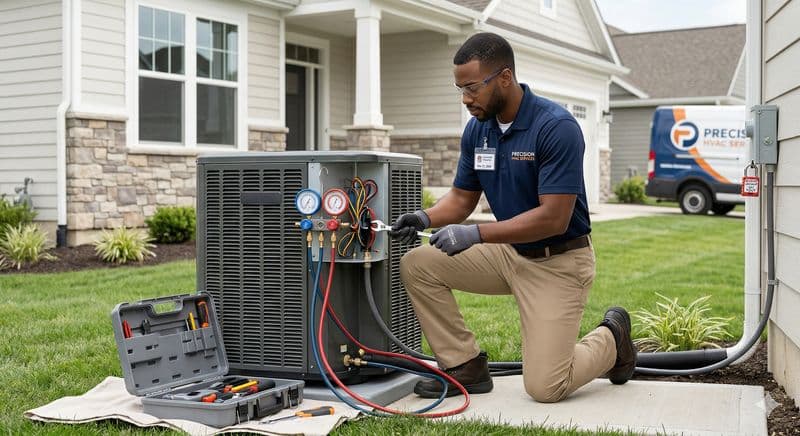
Most Triangle homes heat with a heat pump. They're efficient in our climate, but they lose capacity as temperatures drop below freezing, and that's when small problems show up.
- Change the air filter. A clogged filter is the most common cause of weak heat and high bills.
- Clear around the outdoor unit. Keep leaves, mulch and shrubs at least two feet away so it can breathe.
- Know what's normal. Steam rising from the outdoor unit on a cold morning is usually the defrost cycle doing its job. A unit buried in ice that stays iced over is not normal.
- Watch for "emergency" or "auxiliary" heat running constantly on mild days. That usually means the heat pump itself isn't keeping up, and your electric bill will show it.
- Book a tune-up before the first cold snap. Once temperatures drop, HVAC companies get busy fast and emergency rates apply.
Electrical Safety in Winter
- Plug space heaters directly into a wall outlet. Never use an extension cord or power strip, and keep heaters three feet from anything that can burn.
- If a breaker trips every time the space heater runs, the circuit is overloaded. Stop resetting it and have an electrician take a look.
- Never run a portable generator indoors or in the garage. If you want generator backup during ice-storm outages, an electrician can install an interlock or transfer switch so it's done safely. Find a local electrician.
- Test smoke and carbon monoxide detectors. Winter is when heaters, fireplaces and generators all come into use at once.
Clear the Leaves Before Winter
Triangle yards hold a lot of oaks and maples, and most of their leaves come down from late October through early December. Left on the lawn all winter, they mat down, block sunlight and kill the grass underneath, which leaves bare patches to fix in spring.
- Rake or mulch the leaves before they pile up. A mulching mower can chop a light layer back into the lawn, which is good for the soil.
- Keep leaves out of storm drains and ditches. Clogged drains cause standing water and ice on driveways and streets.
- Clear beds and walkways so wet leaves don't turn into a slipping hazard.
- Check your city's leaf pickup. Raleigh, Durham, Cary and other Triangle towns run seasonal loose-leaf or yard-waste collection, each with its own schedule and rules. Your city's website has the dates for your street.
For a big yard, or if you'd rather skip a weekend of raking, a lawn care pro can haul everything away in a single visit. Get help with leaf removal.
Seal Out the Cold
Small gaps add up to drafty rooms and higher heating bills. These are quick jobs for a handyman, and they're usually best done together in one visit.
- Replace worn weatherstripping and door sweeps on exterior doors
- Re-caulk gaps around windows and trim
- Clean gutters after the leaves drop so melting ice can drain
- Fix doors that don't latch tight
What Common Winter Repairs Cost in the Triangle
Typical price ranges for 2026. After-hours and emergency calls usually cost more.
- Thawing a frozen pipe: $200 – $500
- Burst pipe repair: $250 – $1,000+, not including water damage
- Frost-free outdoor faucet install: $200 – $400
- Heat pump tune-up: $100 – $200
- Heat pump repair: $200 – $900, depending on the part
- Generator interlock or transfer switch: $500 – $1,500
- Weatherstripping and door sweeps: $100 – $250
- Gutter cleaning (single story): $120 – $250
- Leaf removal (typical yard): $150 – $450
Get It Done Before the Cold Arrives
The cheapest winter repair is the one you schedule before it's an emergency. Tell us what you need and we'll match you with a small group of local pros in Raleigh, Durham, Cary, Chapel Hill and Apex. It's free and there's no obligation to hire.
Get Started
Ready to find your Local Bee?
Drop your phone number or email and we'll personally connect you with a local pro in the Raleigh-Durham area.
By signing up, you agree to receive marketing messages from BeeLocal. Message frequency varies. Reply STOP to opt out.